
Bahadurgarh Nawab’s Mosque
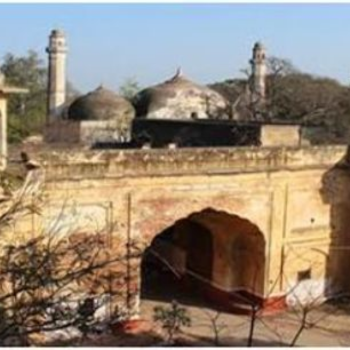
Bahadurgarh Nawab’s Mosque is a Mughal-era mosque located in Bahadurgarh, Haryana, India. It represents the architectural and cultural heritage of the region’s late Mughal and early princely periods, reflecting Islamic artistic traditions that flourished under local rulers.
Key facts
-
Location: Bahadurgarh, Haryana, India
-
Era: Mughal period (late 18th to early 19th century)
-
Built by: The Nawab of Bahadurgarh
-
Architectural style: Indo-Islamic / Mughal
-
Current status: Protected heritage site under local administration
Historical background
The mosque was commissioned by the Nawab of Bahadurgarh, a local ruler who governed the principality during the declining years of the Mughal Empire. It served as the main congregational mosque for the Nawab’s court and community, symbolizing both political authority and religious devotion. Its construction reflects the continued influence of Mughal aesthetics in provincial architecture even as imperial power waned.
Architecture and design
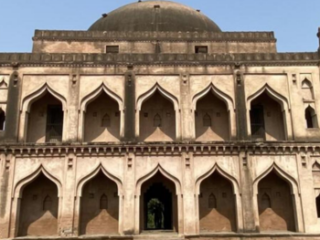
Constructed primarily in red and grey sandstone with lime plaster detailing, the mosque features classic Mughal elements such as domes, minarets, cusped arches, and intricate floral stucco. The prayer hall is oriented toward Mecca, with a mihrab niche highlighting qibla direction. Decorative calligraphy and carved motifs display fine craftsmanship typical of the era’s hybrid Indo-Islamic style.
Cultural and heritage significance
The Bahadurgarh Nawab’s Mosque remains an important religious and historical landmark. It is frequented for daily prayers and stands as a reminder of Bahadurgarh’s princely legacy. Preservation efforts by Haryana’s heritage authorities aim to maintain the mosque’s structural integrity and safeguard it as part of the state’s Mughal-period architectural heritage.